Author: Arrisje

Curry Mustard Cauliflower

Curry Mustard Cauliflower

Curry Cauliflower a different way. Very tasty a recipe from Ottolenghi’s recipe book simple.

Mongolian Beef

Mongolian Beef

Despite its name, Mongolian beef did not originate in Mongolia. It is a Chinese-American dish adapted from the beef component of Mongolian barbecue. Curiously enough, Mongolian barbecue is not Mongolian nor is barbecuing involved in its cooking.

Bulgogi

Bulgogi

Bulgogi, a classic Korean dish of thinly sliced, marinated beef, is a staple of Korean households. Bulgogi—eaten over rice or wrapped in lettuce or added to Dolsot Bibimbap—Bulgogi is a ubiquitous meal in seemingly every Korean cook’s repertoire and deeply ingrained in Korean culture. According to the peer-reviewed Korea Journal, the dish’s origins stretch back to the Goguryeo era (37 B.C. to 668 A.D.), the evolution of a kabob-like skewered meat preparation called maekjeok. Over time, maekjeok became seoryamyeok, a brothy dish of marinated beef soaked in cold water, which by the early 20th century gave way to neobiani, a luxurious dish of thinly-sliced, marinated and charbroiled beef favored by Korean royalty. Info from Smithsonian
Ingredients
For the Marinade
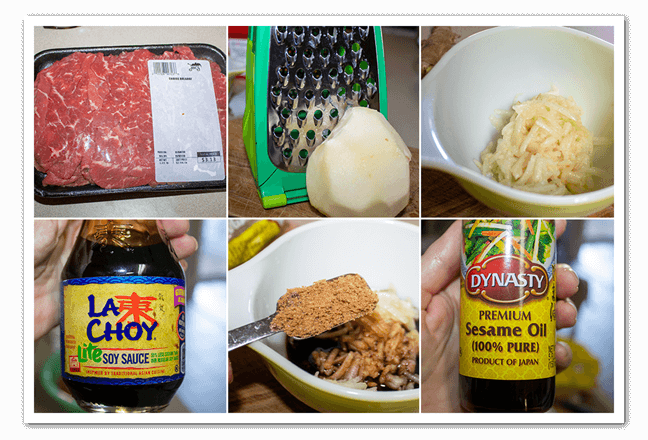
  • 1/3 cup finely grated Pear
  • ½ cup reduced sodium soy sauce
  • 1 tbsp brown sugar
  • 1 tbsp sesame oil
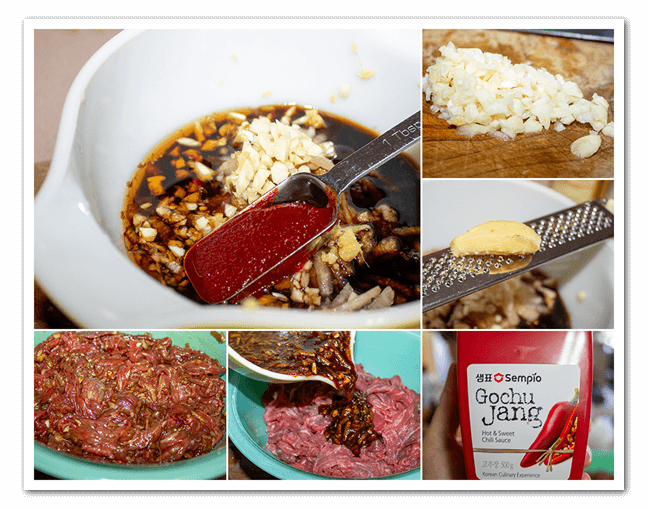
  • 1 small onion thinly chopped
  • 2 garlic cloves minced
  • 2 tsp grated peeled ginger
  • 1 tbsp Gochu Jang (hot and sweet chili sauce)
  • 1 sliced green onion
  • 1 tsp toasted sesame seeds
  • 1 pound thinly sliced rib eye steak or already sliced steak for bulgogi
 

Instructions
  1. Prepare the marinade and add to the sliced Steak. Marinade for at least 1 hour.
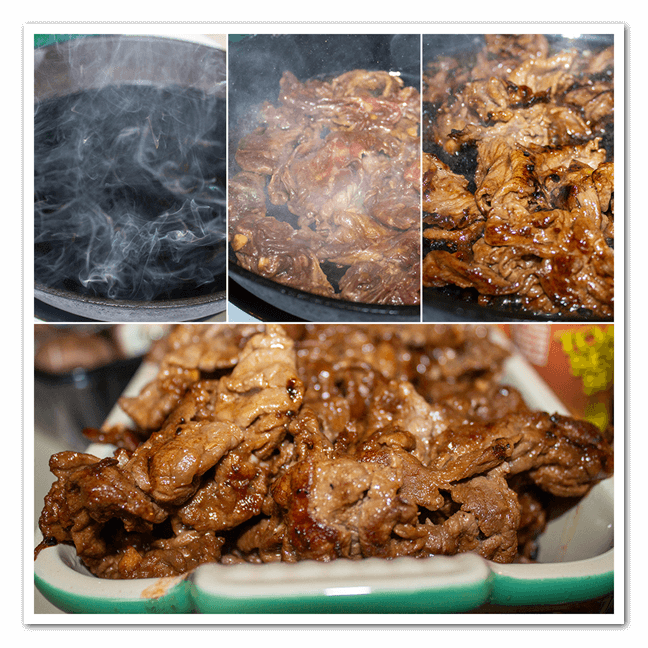
  2. Add some cooking oil into a wok or a cast iron skillet and cook the meat on medium high to high heat. It takes about 3 to 5 mins to thoroughly cook it. Sprinkle with toasted sesame seeds and sliced green onion. Eat with cooked rice or make Bibimbap another famous Korean Dish.

*Below is my recipe card, right click and save as pic. Print as 6×4. *

Bulgogi

Bulgogi, a classic Korean dish of thinly sliced, marinated beef, is a staple of Korean households. bulgogi—eaten over rice or wrapped in lettuce—is a ubiquitous meal in seemingly every Korean cook’s repertoire and deeply ingrained in Korean culture. According to the peer-reviewed Korea Journal, the dish’s origins stretch back to the Goguryeo era (37 B.C. to 668 A.D.), the evolution of a kabob-like skewered meat preparation called maekjeok. Over time, maekjeok became seoryamyeok, a brothy dish of marinated beef soaked in cold water, which by the early 20th century gave way to neobiani, a luxurious dish of thinly-sliced, marinated and charbroiled beef favored by Korean royalty.
No ratings yet
Print Pin Comment
Prep Time 1 hour 10 minutes
Cook Time 5 minutes
Total Time 1 hour 15 minutes
Course Beef
Cuisine Korean
Add to Shopping List

Ingredients

For the Marinade

  • 1/3 cup finely grated Asian Pear
  • 1/2 cup reduced sodium soy sauce
  • 1 tbsp brown sugar
  • 1 tbsp sesame oil
  • 1 onion thinly chopped
  • 2 garlic cloves minced
  • 2 tsp grated peeled ginger
  • 1 tbsp Gochu Jang hot and sweet chili sauce
  • 1 sliced green onion
  • 1 tsp toasted sesame seeds
  • 1 pound thinly slice rib eye steak or already sliced steak for bulgogi

Instructions

  • Prepare the marinade and add to the sliced Steak. Marinade for at least 1 hour.
  • Add some cooking oil into a wok or a cast iron skillet and cook the meat on medium high to high heat. It takes about 3 to 5 mins to thoroughly cook it. Sprinkle some toasted Sesame seeds and sliced green onion on the Bulgogi. Eat with cooked rice or make Bibimbap
Tried this recipe?Mention @KinFolkRecipes or tag #KinFolkRecipes!


Dolsot Bibimbap

Dolsot Bibimbap

Bibimbap means “mixed rice with meat and assorted vegetables“. You can make endless variations to this dish depending on your preference. To me this mixed rice has a lot of similarities as Nasi Goreng.  I serve Bibimbap in a dolsot bowl. Dolsot bibimbap is  served 

Kapsalon

Kapsalon

Kapsalon, this meal has turned into one of the most popular street foods of the Netherlands has an interesting mix of influences: Dutch and Middle-Eastern.  The name kapsalon comes from the Dutch word for hairdressing  shop, and the dish itself is a recent invention — it was created in 2003 in Rotterdam.