This is a good copy cat recipe of Chili’s and can be used as an appetizers, or dinner since it got everything already in one small package. 🙂 It’s best to make these a day ahead before consumption. The 4 hours 20 minute prep time includes freezing this appetizer.
Red, Purple Cabbage: cabbage gets its color from a pigment called anthocyanin as do all red, blue, and purple plants. Red cabbage was even grown in the Middle Ages when botanists learned to encourage its special color feature.
In its raw state, cabbage contains iron, calcium, and potassium. High marks are given for its vitamin C content. Cabbage is also high in vitamins B1, B2, and B3. Lengthy cooking tends to lower the nutritional value considerably.
Red cabbage is higher in fiber than green, with 4 ounces of it boiled and drained offering 2.7 grams. It’s higher in vitamin C, offering 25.8 milligrams for 4 ounces cooked. Red cabbage is also higher in calcium, iron, and potassium than its green cousin.
Savoy and napa cabbage can boast they contain 20% of the RDA for vitamin A, while red and green cabbages contain considerably less. Bok choy contains the most vitamin A, supplying 60% of the RDA, although it is equal to red and green cabbage in other nutrients.
Pickling is an excellent way to preserve the vitamin C in cabbage. In fact, Captain Cook attributed his crew’s good health to a daily ration of sauerkraut.
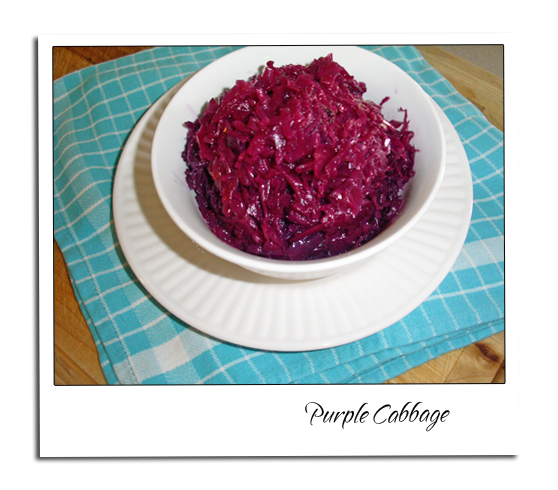
Purple Cabbage: (Rode Kool) Is another recipe of my mom, this is the kind of food I grew up with. The pictures are not doing justice to this easy recipe.
Ingredients
1/2 purple cabbage 3 small apples or 2 large apples 2 tbsp sugar 1/8 tsp ground cloves if you have whole cloves add 2 1 tbsp vinegar( red or apple) 1/2 minced onion 1/4cup rice 1 bay leaf 1 tsp salt
1. Remove the outer leaves of the cabbage and take the core out. Cut the cabbage into thin strips place them with enough water to cover the cabbag in the pot. Add to the pot the chopped onion and apple, cloves sugar and vinegar. Bring to a boil at the highest setting and let the cabbage cook 50 minutes on medium high. When the cabbage has been cooking for 30 min add the rice, that will thicken the liquid. If you don’t want to use rice you can add diluted cornstarch. Add salt to your taste.
*My recipe card. Right Click on below picture. Save to your hard drive. Print as a 4×6 picture.*
1/8tspground cloves if you have whole cloves add 2
1tbspvinegarred or apple
1/2minced onion
1/4cuprice
1bay leaf
1tspsalt
Instructions
Remove the outer leaves of the cabbage and take the core out. Cut the cabbage into thin strips place them with enough water to cover the cabbag in the pot. Add to the pot the chopped onion and apple, cloves sugar and vinegar. Bring to a boil at the highest setting and let the cabbage cook 50 minutes on medium high. When the cabbage has been cooking for 30 min add the rice, that will thicken the liquid. If you don't want to use rice you can add diluted cornstarch. Add salt to your taste.
Jambalaya is pronounced jahm-buh-LIE-uh or jum-buh-LIE-uh According to the Online Etymology dictionary 1872, from Louisiana Fr., from Prov. jambalaia “stew of rice and fowl.” Jambalaya originated in southern Louisiana by the Cajuns around the bayou where food was scarce, as opposed to the richer part …
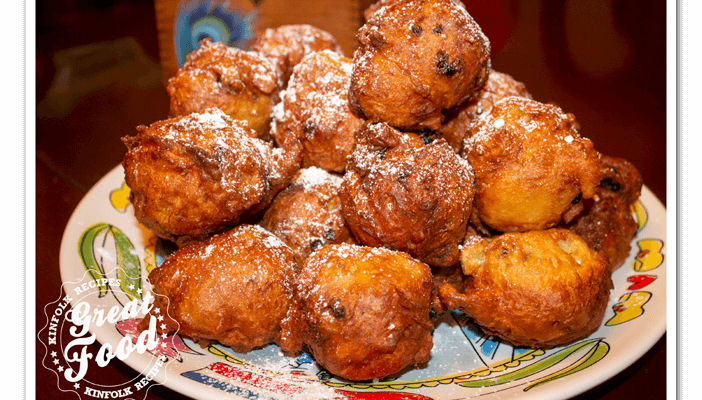
An oliebol (plural oliebollen is a traditional Dutch food. Oliebollen (literally oil balls) are traditionally eaten on New Year’s Eve and at funfairs. They are also called smoutebollen in Belgium. Sometimes it is referenced in English as Dutch donut.
They are said to have been first eaten by Germanic tribes in the Netherlands during the Yule, the period between December 26 and January 6. The Germanic goddess Perchta, together with evil spirits, would fly through the mid-winter sky. To appease these spirits, food was offered, much of which contained deep-fried dough. It was said Perchta would try to cut open the bellies of all she came across, but because of the fat in the oliebollen, her sword would slide off the body of whomever ate them.