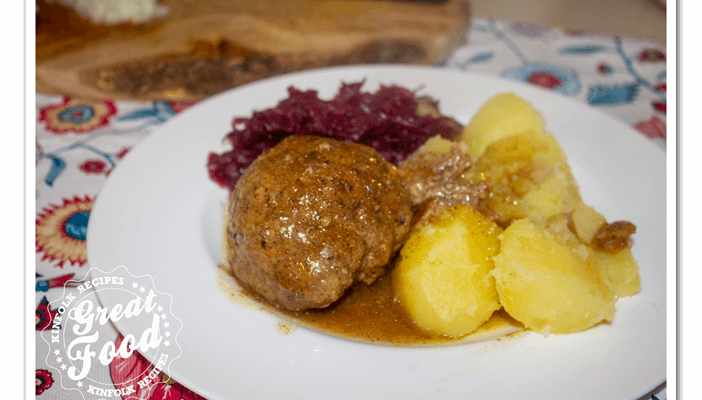
Meatballs gehaktbal “Woensdag, gehaktdag!” (“Wednesday, minced meat day!”That is how it used to be up until the 1960s: on Wednesdays, virtually every Dutch housewife would serve minced meat for dinner. Even today, more traditional families and elderly people eat minced meat on Wednesday. Now why would a whole country eat the same food on the same day?
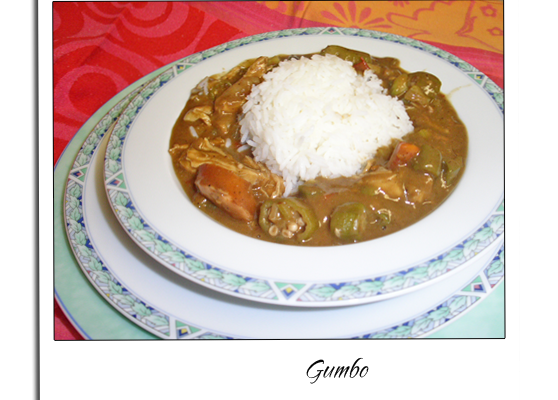
Gumbo is one of those dishes you will find that numerous people claim to have the perfect recipes. (and I am one of them 🙂 No matter what ingredients you put into a gumbo you’re going to get a little bit of the four cultures living in Louisiana: Cajun, Creole, Indian, and African. Louisiana’s Creole cooking came from a European blend of its French founders and the Spanish who took over the territory from France. The French contributed classic techniques like roux, and the Spanish introduced tomatoes, peppers and garlic that were commonly used in their cooking. Cajuns were French, Acadians exiled from Nova Scotia. They were simple country folks who cooked with what was cheap and available. Slaves named the dish “gumbo” after the African word okra, used as it thickener. The native Choctaw Indians added file, their own thickener made from sassafras leaves.
The problem with making shoarma, shwarma or donner kebab at home (and the word can be also spelled schwarma or shawrama) is that the original versions are all made on a vertical spit that turns in front of an open gas or charcoal generated flame. A secondary problem is that the average skewer used is almost 1.5 cm. thick and holds between 8 – 10 kilos of meat. Cooking at home requires a different method and, of course, smaller amounts of meat.
Here, after a great deal of both rewarding and not all that rewarding experimentation, is the very best I can come up with. It may not be quite “the real thing”, but it will satisfy in many of the same ways.
Ingredients
Boneless lamb if you can’t get that use porkloin or chicken breast Pita Bread Shredded lettuce 1 small bunch of parsley For the shoarma seasoning mix: 2tbsp, cumin 2 tbsp, coriander 1 tbsp cinnamon 1 tsp nutmeg 2 tsp paprika 1 tsp pepper 1 tsp garlic powder 1 tsp curry 1/2tsp salt 1/2 tsp accent For the garlic sauce 1 cup kraft light mayo 1/2 cup sour cream 1 tbsp dill weed 1 tbsp crushed garlic For the poesta sauce: If you can’t buy curry ketchup you have to make it yourself with the following ingredients: 1/4 cup minced onion 1 tbsp butter 1 tsp curry 1 tsp paprika pinch of cayenne 1 cup of ketchup 1/2 cup of water 1 tbsp sambal 1/2 minced onion
Instructions
1. Cut meat (preferably lamb, if you don’t have that available use pork-loin or chicken breast in small pieces, use 1 tbsp shoarma seasoning mix per lb. Add the parsley. Marinade for at least 1 hour, better would be overnight. Put 1 tbsp olive oil in a hot skillet and fry the meat in the skillet till done.
2. The garlic sauce you make the following way: Combine 1 cup sour cream, 1/2 cup Kraft mayonnaise light, dill weed, garlic. To dilute the sauce use a little milk. 3. Poesta sauce:If you can’t buy the curry ketchup you just have to make it yourself the following way: Cook 1/4 cup of minced onion in a saucepan with 1 tbsp butter until soft. Add 1 tsp curry powder, 1 tsp paprika, and a pinch of cayenne. Cook about 1 minute. Add 1 cup of ketchup and 1/2 cup of water. Simmer until thick that should take about 25 minutes. then add the sambal and 1/2 cut minced onion.
4. Cut the pita bread in half, make it slightly wet and put in the bread toaster. Put the garlic sauce in the pita bread top with lettuce then the meat. Add sauce to your liking.
*Arrisje’s Recipe Cards. Right Click on the picture and save to your hard drive, print as a 4×6 pic*
Shoarma
The problem with making shoarma, shwarma or donner kebab at home (and the word can be also spelled schwarma or shawrama) is that the original versions are all made on a vertical spit that turns in front of an open gas or charcoal generated flame. A secondary problem is that the average skewer used is almost 1.5 cm. thick and holds between 8 – 10 kilos of meat. Cooking at home requires a different method and, of course, smaller amounts of meat. Here, after a great deal of both rewarding and not all that rewarding experimentation, is the very best I can come up with. It may not be quite “the real thing”, but it will satisfy in many of the same ways.
If you can't buy curry ketchup you have to make it yourself with the following ingredients:
1/4cupminced onion
1tbspbutter
1tspcurry
1tsppaprika
pinchof cayenne
1cupof ketchup
1/2cupof water
1tbspsambal
1/2minced onion
Instructions
Cut meat (preferably lamb, if you don't have that available use pork-loin or chicken breast in small pieces, use 1 tbsp shoarma seasoning mix per lb. Add the parsley. Marinade for at least 1 hour, better would be overnight. Put 1 tbsp olive oil in a hot skillet and fry the meat in the skillet till done.
The garlic sauce you make the following way: Combine 1 cup sour cream, 1/2 cup Kraft mayonnaise light, dill weed, garlic. To dilute the sauce use a little milk.
Poesta sauce:If you can't buy the curry ketchup you just have to make it yourself the following way: Cook 1/4 cup of minced onion in a saucepan with 1 tbsp butter until soft. Add 1 tsp curry powder, 1 tsp paprika, and a pinch of cayenne. Cook about 1 minute. Add 1 cup of ketchup and 1/2 cup of water. Simmer until thick that should take about 25 minutes. then add the sambal and 1/2 cut minced onion.
Cut the pita bread in half, make it slightly wet and put in the bread toaster. Put the garlic sauce in the pita bread top with lettuce then the meat. Add sauce to your liking.
Lasagna, also lasagne, is both a form of pasta in sheets (often rippled in North America and other countries, though seldom so in Italy) and also a dish, sometimes named Lasagne al forno (meaning “Lasagne in the oven”) made with alternate layers of pasta, cheese, and sometimes ragu (a meat sauce). While it is traditionally believed to have originated in Italy, evidence has come to light suggesting that a very similar meal known as “loseyns” (pronounced ‘lasan’) was eaten in the court of King Richard II of England in the 14th Century. The word “lasagna” is derived from the Greek word “lasanon” meaning chamber pot. The word was later borrowed by the Romans as “lasanum” to mean cooking pot. The Italians then used the word to refer to the dish in which what is now known as lasagna is made. The word lasagna or lasagne (plural) now simply applies to the food itself. The British (and Italians) generally use the plural “lasagne” to mean both the dish and the pasta while the Americans commonly use the singular “lasagna”
A gevulde koek is an almond cookie made of dough and butter with a sweet filling. Almond paste is the most common filler. An almond cookie with a diameter of about 10 cm, a half amandel on top. The top of the cake is shiny brown, an effect that is achieved through the dough to cover with beaten egg. It is a typical Dutch bakery item. The cookie is eaten with coffee, tea and hot chocolate.
The cheaper versions ( the one you mostly buy in the supermarket) are not always filled with almond paste, many of them filled with beans instead of almond paste.
Rondo (also called Amsterdammertje) and a canoe have the same ingredients as an almond cookie, but baked in a mold. Rondo is a round and an elongated canoe.