Even though curry is generally categorized as an Indian dish these days, the earliest known recipe for meat in spicy sauce with bread was discovered near Babylon in Mesopotamia, on a tablet printed in cuneiform text. This was way back in 1700 BC, and the …
is the classic example of an inexpensive regional folk food utilized by working-class folk and generally categorized as comfort food.
The precise origins of this dish is unclear, but many sources attribute its development to German and Austrian immigrants moving to beef-growing areas of western Louisiana, Texas, Oklahoma, and possibly further north into Kansas, who brought recipes for Wiener Schnitzel from Europe to the USA. Now I am still wondering why call it chicken fried steak and there is not one piece of chicken in this dish. So I did a litle research and found out that one of the earliest mentions of a similar food is a recipe for veal cutlets. By the late nineteenth century numerous cook books provided the recipe. At that time the delicacy was usually called pan-fried steak or country-fried steak, or some similar designation, and it was very similar to the fried pork cutlets so popular in the South, where the swine industry was much more important than beef production. Chicken-fried steak is almost identical to German schnitzel
The actual term “chicken fried steak” was probably developed in the 1930s. It is possible the name change for this recipe was due to the war with Germany.
“Woensdag, gehaktdag!” (“Wednesday, minced meat day!”That is how it used to be up until the 1960s: on Wednesdays, virtually every Dutch housewife would serve minced meat for dinner. Even today, more traditional families and elderly people eat minced meat on Wednesday. Now why would a whole country eat the same food on the same day?
That has to do with the fact that butchers used to slaughter the animals themselves. They usually did so on Monday. On Tuesday, they would process the meat into high quality steaks, chops and the like. Finally, on Wednesday, the butcher would take the leftovers and turn them into minced meat that he would sell at a special low price.
The slogan “Woensdag, gehaktdag!” was introduced by the butcher association to promote their products and industry. The slogan took on and is still known today. Along the way, it even got new meanings. Today it is also used to refer to the third Wednesday in May. On this day, the Dutch Minister of Finance presents and defends the State expenses over the last year in parliament. If the defense is flawed or the State has spent her money unwisely, the Parliament will “make minced meat” of the minister (figuratively spoken of course).
In 2007, a very controversial book was published in the Netherlands with the title “Woensdag, Gehaktdag”. It was written by the convicted killer Richard Klinkhamer and in it, he describes how he fantasized about killing his wife and how he ultimately lived his fantasy in 1991.
Personally I prefer the original meaning: simply eating some nice meat balls on Wednesday (or any other day for that matter).
Information of the origin of the Dutch Gehaktbal found on Dutch Ancestory Magazine
Ingredients
2 slices of bread
½ lb ground beef (preferably 90%)
½ lb ground pork
1 egg
½ cup of bread crumbs, ¼ cup for
rolling the meatballs
1 small onion, minced
½ tsp salt
½ tsp curry powder
½ tsp nutmeg
½ tsp pepper
optional parsley1
1 tbsp cornstarch diluted w 1 tbsp water
Instructions
Break up the bread, add enough milk to saturate the bread. Squeeze the milk out of the bread, put 1 egg, ½ cup of bread crumbs, minced onion and seasonings to the ground beef/pork . If you have some fresh parsley available, add it to the ground meat.
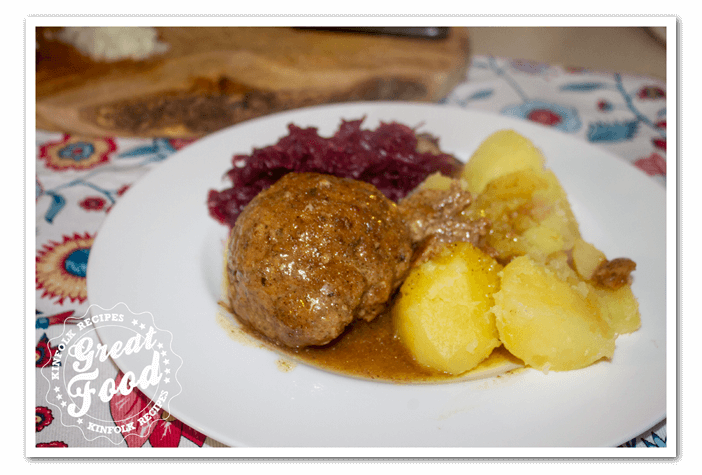
Mix all together and make the meatballs. Roll the meatballs in the breadcrumbs. The Dutch meatballs are large, about the size of a tennis ball.
Heat the Dutch Oven on med-high, wait till the Dutch oven is hot. Then add one stick of butter. Wait till the butter turns slightly brown. Add the meatballs and brown on all sides. Add enough water till the meatballs are half way submerged. Put the lid on the pot and simmer for 30 min.
Take out the meatballs. Now you make the gravy. Mix 1 tbsp water to 1 tbsp cornstarch, add diluted cornstarch to the gravy to make the gravy thick.
Arrisje’s Recipe Card 4×6 * Right Click on this picture then save to your hard drive, print as a 4×6 picture *
Meatballs (gehaktballetje)
The slogan "Woensdag, gehaktdag!" was introduced by the butcher association to promote their products and industry. The slogan took on and is still known today. Along the way, it even got new meanings. Today it is also used to refer to the third Wednesday in May. On this day, the Dutch Minister of Finance presents and defends the State expenses over the last year in parliament. If the defense is flawed or the State has spent her money unwisely, the Parliament will “make minced meat” of the minister (figuratively spoken of course).
Break up the bread, add enough milk to saturate the bread. Squeeze the milk out of the bread, put 1 egg, ½ cup of bread crumbs, minced onion and seasonings to the ground beef/pork . If you have some fresh parsley available, add it to the ground meat.
Mix all together and make the meatballs. Roll the meatballs in the breadcrumbs. The Dutch meatballs are large, about the size of a tennis ball.
Heat the Dutch Oven on med-high, wait till the Dutch oven is hot. Then add one stick of butter. Wait till the butter turns slightly brown. Add the meatballs and brown on all sides. Add enough water till the meatballs are half way submerged. Put the lid on the pot and simmer for 30 min.
Take out the meatballs. Now you make the gravy. Mix 1 tbsp water to 1 tbsp cornstarch, add diluted cornstarch to the gravy to make the gravy thick.
Lasagna, also lasagne, is both a form of pasta in sheets (often rippled in North America and other countries, though seldom so in Italy) and also a dish, sometimes named Lasagne al forno (meaning “Lasagne in the oven”) made with alternate layers of pasta, cheese, and sometimes ragu (a meat sauce). While it is traditionally believed to have originated in Italy, evidence has come to light suggesting that a very similar meal known as “loseyns” (pronounced ‘lasan’) was eaten in the court of King Richard II of England in the 14th Century. The word “lasagna” is derived from the Greek word “lasanon” meaning chamber pot. The word was later borrowed by the Romans as “lasanum” to mean cooking pot. The Italians then used the word to refer to the dish in which what is now known as lasagna is made. The word lasagna or lasagne (plural) now simply applies to the food itself. The British (and Italians) generally use the plural “lasagne” to mean both the dish and the pasta while the Americans commonly use the singular “lasagna”
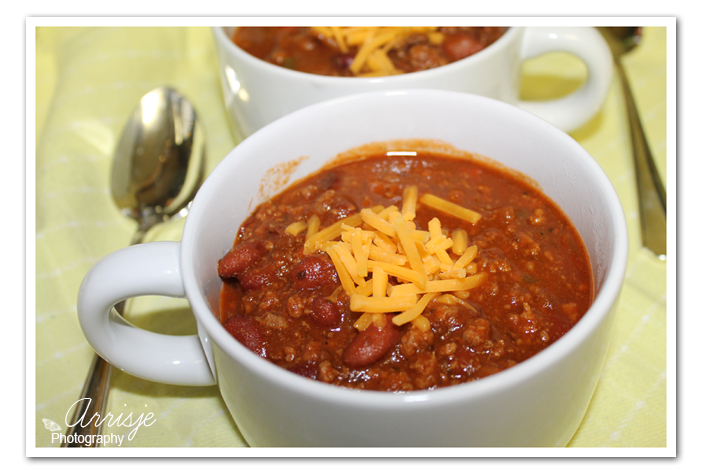
Chili: One thing we know for certain is that Chili did not originate in Mexico. There are many legends and stories about where chili originated and it is generally thought, by most historians, that the earliest versions of chili were made by the very poorest people. If there is any doubt about what the Mexicans think about chili, the Diccionario de Mejicanismos, published in 1959, defines chili con carne as (roughly translated):?detestable food passing itself off as Mexican, sold in the U.S. from Texas to New York.? Chili is the official dish of the U.S. state of Texas. It can be found worldwide in local variations and also in certain American-style fast food restaurants like Wendy’s ;). A popular saying among self-proclaimed chili purists is, “If you know beans about chili, you know chili ain’t got no beans.” The concept that beans do not belong in chili may be further credited to the fact that most official chili cookoffs do not allow beans. In many cases, a chili will be disqualified if it contains such ingredients, considered filler. I found this recipe clone of Wendy’s and tried it. And surprisingly it taste a lot like it. And here I got another version of Chili