Succotash

Succotash

True succotash contains lima beans and corn. The rest seems to be up for grabs.
Succotash is thought to be one of the first recipes the Algonquin Indians taught the settlers at Plymouth Rock. Succotash was also made by the Narragansett Indians, who called it misckquitash, which means “boiled corn”. It is notable that the two primary ingredients are two of the main agricultural crops of many Native American tribes.

Atjar Tjampoer (Indonesian)

Atjar Tjampoer (Indonesian)

Atjar Tjampoer is a an Indonesian sweet and sour dish. The fresh flavor of Atjar is a good combination with spicy dishes. But is also delicious with Nasi or Bahmi, satay |and Babi Pangang, |[https://arrisje.com/babi-pangang/] and other dishes. As the word tjampoer (mixed) already says Atjar Tjampoer is a mixed pickled vegetable dish.

Pico de Gallo

Pico de Gallo

Pico de gallo can be used in much the same way as other Mexican salsas, Kenyan Kachumbari or Indian chutneys, but since it contains less liquid, it can also be used as a main ingredient in dishes such as tacos and fajitas.

In some regions of Mexico, a fruit salad (watermelon, orange, jicama, cucumber and sometimes melon and papaya) tossed in lime juice and hot sauce or chamoy and sprinkled with a salty chili powder is also known as pico de gallo; it is a popular snack and usually sold outside schools, while the tomato-based condiment is better known as salsa picada, which means minced or chopped sauce, salsa bandera or salsa mexicana, because the colors red (tomato), white (onion), and green (chili) are the colors of the Mexican flag.

One of the sources for the name “rooster’s beak” could be the beak-like shape and the red color of the chilis used to make it. According to food writer Sharon Tyler Herbst,it is so called because originally it was eaten with the thumb and forefinger, and retrieving and eating the condiment resembled the actions of a pecking rooster.

Another suggested etymology is that pico is derived from the verb picar, which has two meanings: 1) to mince or chop, and 2) to bite, sting or peck. The rooster, gallo in Spanish, is a common metaphor for the hyper-masculine (“macho”) male in Mexican culture. One example of such machismo is taking pride in withstanding the spicy burn of chilis.

However, neither theory can be considered definite, as they assume the use of hot chilis. In many regions of Mexico the term “pico de gallo” refers to any of a variety of salads, condiments or fillings made with sweet fruits, tomatoes, tomatillos, avocado or mild chilis — not necessarily with hot chilis, or any chilis at all. Thus, the name could be a simple allusion to the bird feed-like minced texture and appearance of the sauce.

The source of this article is wikipedia, the free encyclopedia.

Purple Cabbage (Dutch)

Purple Cabbage (Dutch)

Red, Purple Cabbage: cabbage gets its color from a pigment called anthocyanin as do all red, blue, and purple plants. Red cabbage was even grown in the Middle Ages when botanists learned to encourage its special color feature.

In its raw state, cabbage contains iron, calcium, and potassium. High marks are given for its vitamin C content. Cabbage is also high in vitamins B1, B2, and B3. Lengthy cooking tends to lower the nutritional value considerably.

Red cabbage is higher in fiber than green, with 4 ounces of it boiled and drained offering 2.7 grams. It’s higher in vitamin C, offering 25.8 milligrams for 4 ounces cooked. Red cabbage is also higher in calcium, iron, and potassium than its green cousin.

Savoy and napa cabbage can boast they contain 20% of the RDA for vitamin A, while red and green cabbages contain considerably less. Bok choy contains the most vitamin A, supplying 60% of the RDA, although it is equal to red and green cabbage in other nutrients.

Pickling is an excellent way to preserve the vitamin C in cabbage. In fact, Captain Cook attributed his crew’s good health to a daily ration of sauerkraut.
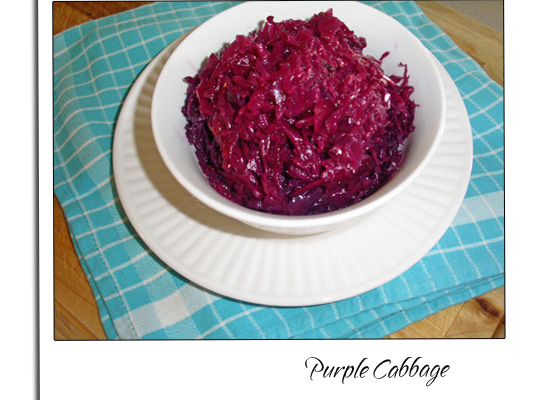
Purple Cabbage: (Rode Kool) Is another recipe of my mom, this is the kind of food I grew up with. The pictures are not doing justice to this easy recipe.

The Best Collard Greens you will ever Make

The Best Collard Greens you will ever Make

Collards, also called collard greens or borekale (Brassica oleracea Acephala Group), are various loose-leafed cultivars of the cabbage plant. The plant is grown for its large, dark-colored, edible leaves and as a garden ornamental, mainly in Brazil, Portugal, the Southern United States, many parts of Africa, Montenegro, Spain and in Kashmir as well. They are classified in the same cultivar group as kale and spring greens, to which they are extremely similar genetically.