Goulash

Goulash

This thick, hearty dish was (and still is) a very popular dish among herdsmen in Hungary. This peasant dish got on the table only towards the end of the 19th century. Restaurants started to put goulash on their menus to. By the second half of the 20th century the soup became the number one dish of Hungary. It got this name because the herdsman of Hungary often travelled far from home on horseback with their sheep to find better pastures on the Hungarian plains. At nightfall the herdsman’s would build a fire, slaughter an animal and then cook it for several hours in a large pot hanging over the fire known as a bográc.

There are many different ways of making goulash, as it is with every dish. Goulash can be served with potatoes, dumplings, spatzle, or just as a stand-alone dish with bread.
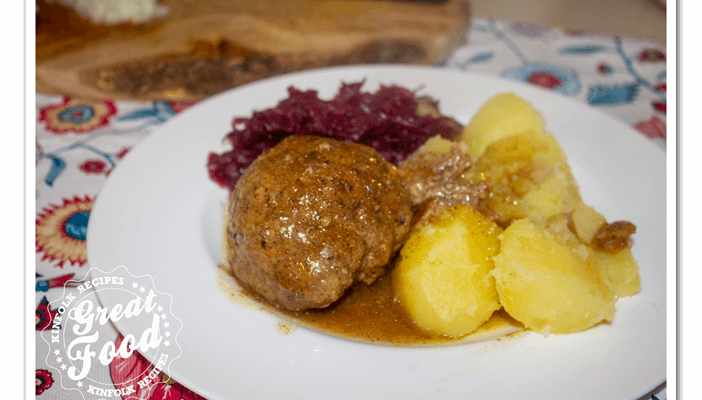
Meatballs gehaktbal

Meatballs gehaktbal

Meatballs gehaktbal “Woensdag, gehaktdag!” (“Wednesday, minced meat day!”That is how it used to be up until the 1960s: on Wednesdays, virtually every Dutch housewife would serve minced meat for dinner. Even today, more traditional families and elderly people eat minced meat on Wednesday. Now why would a whole country eat the same food on the same day?

Lasagna

Lasagna

Lasagna, also lasagne, is both a form of pasta in sheets (often rippled in North America and other countries, though seldom so in Italy) and also a dish, sometimes named Lasagne al forno (meaning “Lasagne in the oven”) made with alternate layers of pasta, cheese, and sometimes ragu (a meat sauce). While it is traditionally believed to have originated in Italy, evidence has come to light suggesting that a very similar meal known as “loseyns” (pronounced ‘lasan’) was eaten in the court of King Richard II of England in the 14th Century. The word “lasagna” is derived from the Greek word “lasanon” meaning chamber pot. The word was later borrowed by the Romans as “lasanum” to mean cooking pot. The Italians then used the word to refer to the dish in which what is now known as lasagna is made. The word lasagna or lasagne (plural) now simply applies to the food itself. The British (and Italians) generally use the plural “lasagne” to mean both the dish and the pasta while the Americans commonly use the singular “lasagna”

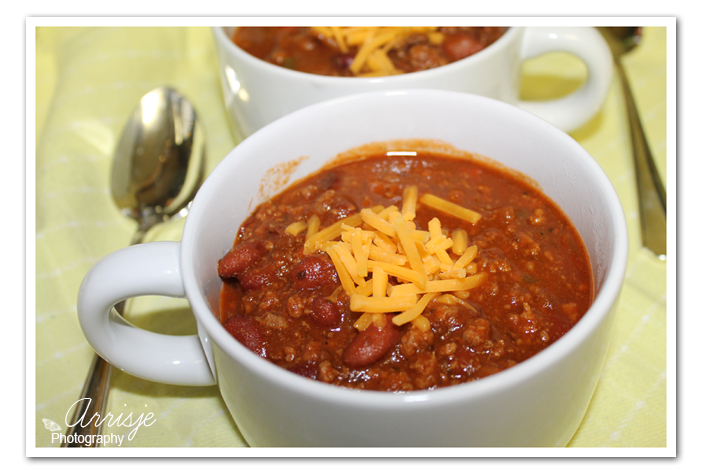
Chili like Wendy’s

Chili like Wendy’s

Chili: One thing we know for certain is that Chili did not originate in Mexico. There are many legends and stories about where chili originated and it is generally thought, by most historians, that the earliest versions of chili were made by the very poorest people. If there is any doubt about what the Mexicans think about chili, the Diccionario de Mejicanismos, published in 1959, defines chili con carne as (roughly translated):?detestable food passing itself off as Mexican, sold in the U.S. from Texas to New York.? Chili is the official dish of the U.S. state of Texas. It can be found worldwide in local variations and also in certain American-style fast food restaurants like Wendy’s ;). A popular saying among self-proclaimed chili purists is, “If you know beans about chili, you know chili ain’t got no beans.” The concept that beans do not belong in chili may be further credited to the fact that most official chili cookoffs do not allow beans. In many cases, a chili will be disqualified if it contains such ingredients, considered filler. I found this recipe clone of Wendy’s and tried it. And surprisingly it taste a lot like it. And here I got another version of Chili

Smoor Daging

Smoor Daging

Smoor Daging is one of the many dishes you can find on a Indonesian/Dutch Rijsttafel buffet. It’s smothered beef in Soya sauce.