Naked Hot Wings

Naked Hot Wings

In the Southern United States, wings are often called hot wings, and have local variations in how they are cooked.
Buffalo wings or Hot Wings were first prepared at the Anchor Bar on Main Street, near the corner of North Street, Buffalo, on October 3, 1964. Teressa Bellissimo, co-owner of the Anchor Bar with her husband Frank, had the idea of deep frying chicken wings and tossing them in Frank’s RedHot sauce[1] for her son Dominic and his friends. One evening, on a spur of the moment, Teressa presented her son with a deep-fried and sauced creation, and they were an instant hit. At the time the recipe was created, chicken wings were typically thrown away or reserved for making stock.

Chimichanga’s

Chimichanga’s

Chimichanga is a meat-filled deep-fried burrito, that originated in Tucson, Arizona. According to a legend, Monica Flin, who started the restaurant El Charro in 1922, accidentally dropped a burrito into the deep fat fryer. She immediately began to utter a Spanish curse-word, but quickly edited herself to say “Chimichanga” the Spanish equivalent of “thingamajig.”

Black Eye Pea Dip

Black Eye Pea Dip

Black eye pea dip

Spinach Artichoke Dip

Spinach Artichoke Dip

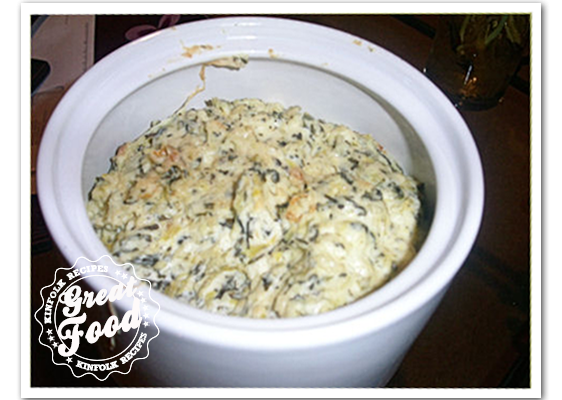
Ingredients 1 (8 ounce) package cream cheese 1/4 cup mayonnaise 1/4 cup sour cream 1/2 cup Romano Parmesan cheese 1 tsp crushed garlic 1/2 teaspoon dried basil pepper to taste 1 (14 ounce) can artichoke hearts, drained and chopped 1/2 cup frozen chopped spinach, thawed 

Deviled Eggs

Deviled Eggs

It makes you wonder how in the world stuffed eggs became “deviled eggs”. what does the term “deviled” actually mean? The word “deviled” first appeared in print in 1786 and was used to describe highly seasoned fried or boiled dishes. By the 1800’s, the term “deviled” evolved and was often used as a culinary term to describe fiery hot spiced dishes or condiments. The use of the word was presumably adopted due to the symbolism of the devil and the excessive heat of, well, you know where. In the 19th century, the word deviled continued to be used to describe hot seasonings, more specifically cayenne or mustard, and again brought with it the connotation of that “hot spot down under”—something hot and spicy.

In modern language, however, the word deviled has a borader meaning and is typically defined as a food that is dark, rich, chocolate, spicily piquant or stimulating item and contains heavy seasoning. The term is deviled is used to describe eggs, crab, cakes, and many other dishes.